
Hornbill Festival 2026: Complete Nagaland Travel Guide | Lumiere Holidays
Plan your Hornbill Festival trip with expert tips on dates, tribal culture, things to do, Dzuko Valley & Nagaland travel advice. Book with Lumiere Holidays.
Quick Answer Summary
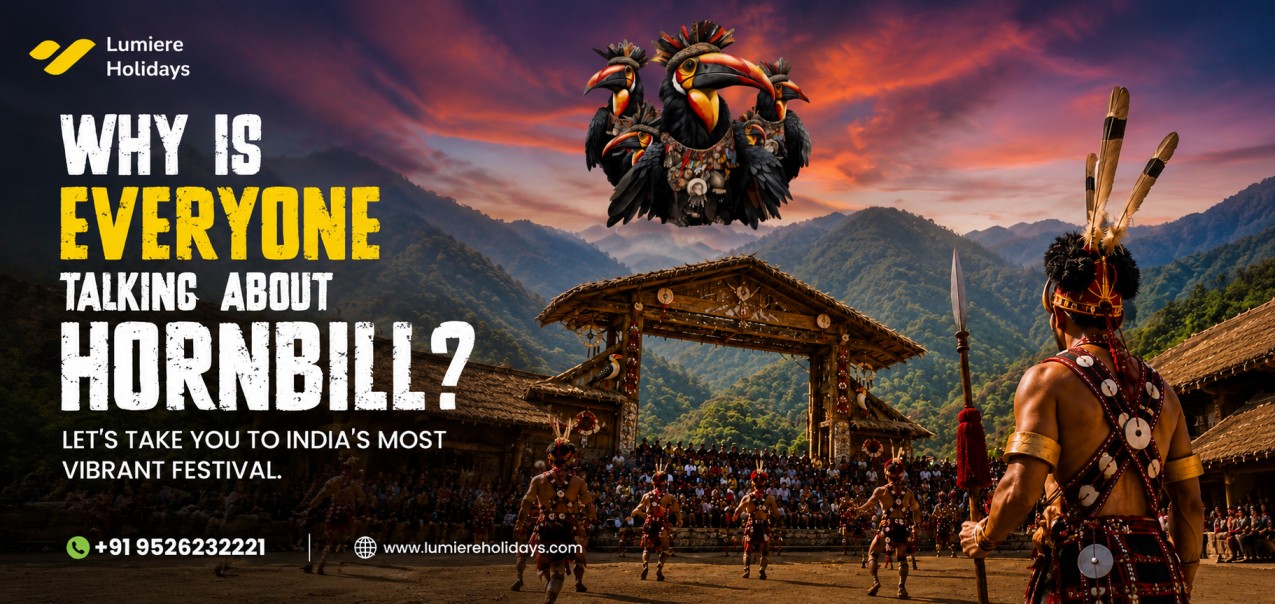
The Hornbill Festival is an annual 10-day cultural celebration held from December 1 to 10 at Kisama Heritage Village, 12 km from Kohima, Nagaland. It brings all 17 recognised Naga tribes together under one roof - making it the largest and most diverse tribal cultural event in Northeast India. The best time to attend is December 1–5, when the energy, performances, and participation are at their peak.
Key Takeaways
- Dates: December 1–10 every year, since 2000
- Venue: Kisama Heritage Village, Kohima District, Nagaland
- Entry Fee: ₹200–₹300/day (domestic); ₹500/day (international visitors)
- December Weather: 14–20°C daytime; 2–8°C at night - warm layers essential
- Nearest Airport: Dimapur Airport (DMU), 74 km from Kohima
- Permit: Inner Line Permit (ILP) required for most Indian nationals and all foreign visitors
- Accommodation: Book at least 3 months ahead - Kohima fills fast during festival week
- Beyond the Festival: Dzuko Valley, just 27 km from Kohima, is an ideal add-on for nature lovers
Introduction: Where Every December, Nagaland Comes Alive
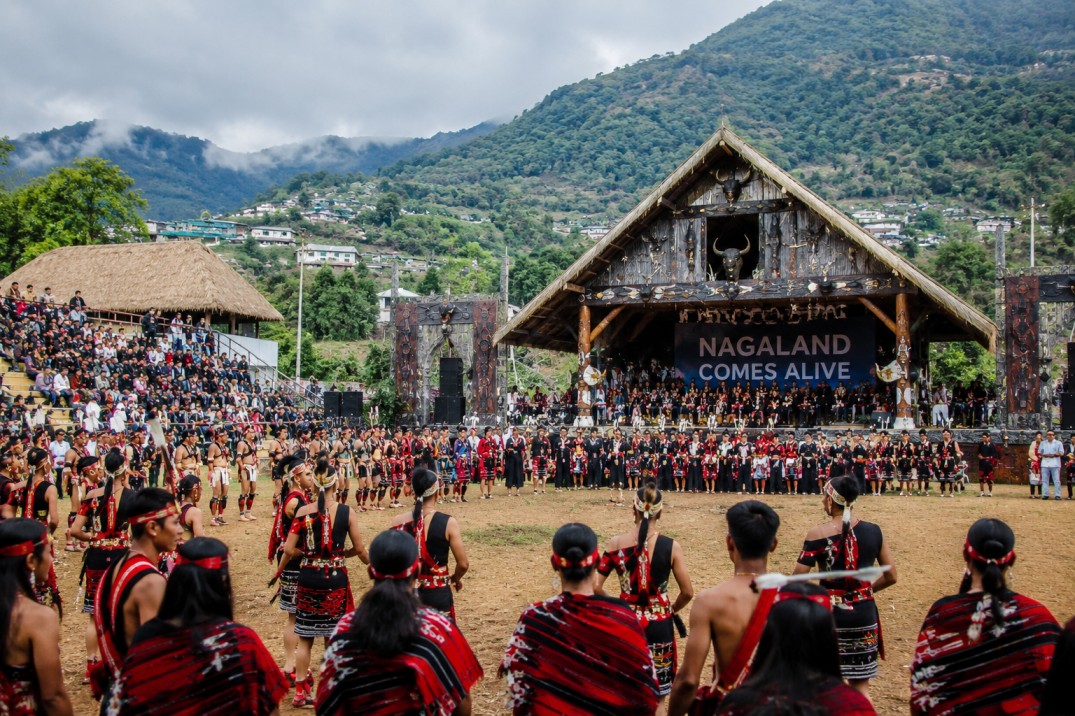 Imagine stepping into a clearing where 17 different tribal communities - each in its own ceremonial dress, carrying its own instruments and oral histories - are performing simultaneously across a hillside village. That is what Kisama Heritage Village looks and sounds like during the first week of December, and it is unlike anything else in India.
The Hornbill Festival has earned the title "Festival of Festivals" not through marketing, but through sheer cultural density. In ten days, you witness what would otherwise require months of travel across remote Nagaland hill districts to experience: the Konyak warriors of Mon, the bamboo musicians of the Zeliang, the terraced-farming Angami, and fourteen more tribes, all gathered in one accessible venue.
This complete Hornbill Festival travel guide covers everything you need to plan a confident, well-timed trip - what it is, the history behind it, what to do, how to get there, where to stay, and what lies beyond the festival grounds including a visit to the remarkable Dzuko Valley nearby.
What Is the Hornbill Festival? History and Origins
The Hornbill Festival is defined as an annual state-government-organised cultural event that brings all 17 recognised Naga tribes together at Kisama Heritage Village in Kohima District, Nagaland, every December 1 to 10.
To understand what you're walking into, the history of Hornbill Festival 2000 is worth knowing. By the late 1990s, Nagaland faced two parallel challenges: younger Naga generations were migrating to cities and losing touch with tribal traditions, and the state remained virtually invisible on India's tourism map. The Government of Nagaland responded by creating a single shared platform - not a competition between tribes, but a collective celebration.
The inaugural festival launched on December 1, 2000, chosen to coincide with Nagaland Statehood Day. What began modestly has grown into an event drawing over 100,000 visitors annually, including international travellers from Japan, South Korea, Germany, and the United Kingdom.
The festival takes its name from the Great Indian Hornbill (Buceros bicornis) - a large, revered bird in Naga folklore that symbolises courage, leadership, and honour. Its feathers remain the most prestigious adornment in traditional Naga ceremonial dress, historically worn only by warriors of distinction.
The 25th edition in 2024, themed "Cultural Connect," featured a special archival exhibition with the National Archives of India titled "Naga-Land & People in Archival Mirror" - a marker of how far the festival has grown beyond entertainment into cultural scholarship and documentation.
The Full Picture
Who Takes Part?
All 17 officially recognised Naga tribes participate: Angami, Ao, Chakhesang, Chang, Dimasa Kachari, Garo, Zeliang, Rengma, Khiamniungan, Sumi, Lotha, Kuki, Konyak, Yimchunger, Sangtam, Phom, and Pochury. Each maintains its own morung (traditional community longhouse) at Kisama Heritage Village during the ten days — the cultural beating heart of the festival.
What Happens Across the 10 Days?
The festival runs from early morning to late night, spanning:
- Tribal dance and music performances - war dances, harvest dances, courtship dances, folk songs
- Indigenous sports - Naga wrestling, traditional archery, greased bamboo pole climbing, log drum beating
- Artisan exhibitions and craft stalls - handwoven shawls, wood carvings, bamboo crafts, pottery, beadwork
- Naga food stalls - smoked pork, bamboo shoot curries, axone (fermented soybean) dishes, traditional rice beer
- Hornbill Night Carnival - evening street market in Kohima with live music, food, and handicrafts
- Hornbill Music Festival - concurrent concerts across rock, folk, and contemporary genres from December 1–10
- Literary and academic events - panel discussions, archival exhibitions, cultural talks (newer additions from 2022 onwards)
When Should You Arrive?
December 1–5 is the sweet spot. The opening ceremony on December 1 has the fullest official participation and the most ceremonially significant moments. December 2 and 3 typically offer the richest combination of morning morung visits, afternoon performances, and evening concerts. By December 8–10, some tribal contingents begin to wind down.
Where Exactly Is the Venue?
Kisama Heritage Village sits in the Southern Angami region of Kohima District, 12 km from Kohima city centre. Shared taxis from Kohima's BOC Stand run to Kisama throughout the day at ₹100–₹200 one way. An Information Centre near the main entry gate distributes festival schedules, brochures, and morung maps on arrival.
Why Does This Festival Matter?
India's tourism sector contributed 5.22% to national GDP in 2023–24 and generated approximately 84.63 million jobs nationally. For Nagaland, the Hornbill Festival is the state's single largest tourism driver. More importantly, it creates a direct economic incentive for tribal communities to maintain traditions - artisans sell their work, performers receive visibility, and elders find an engaged audience for knowledge that might otherwise go undocumented.
How Do You Get There?
Fly into Dimapur Airport (DMU) - the only commercial airport in Nagaland - with direct flights from Kolkata (50 min), Guwahati (30 min), and Delhi (via connections). From Dimapur, take a shared taxi or bus to Kohima (74 km, approximately 2.5–3.5 hours). Festival week sees high road traffic; aim to leave Dimapur by 8 AM to arrive for morning performances.
Things to Do at Hornbill Festival
Morung Village: The Cultural Core
The morung village is where the Hornbill Festival earns its reputation. Each tribe's longhouse is a curated exhibition of their heritage - costumes, tools, ceremonial objects, crafts, and food - staffed by elders willing to speak with visitors. Spending three to four hours here, asking questions and listening, is more valuable than any amount of time at the main performance stage.
Standout morungs to prioritise: the Konyak morung (for the tattooed elders and brass warrior ornaments), the Angami morung (for intricate weaving demonstrations), and the Zeliang morung (for the bamboo music performances that have become one of the festival's most-requested acts).
Tribal Performances on the Main Stage
The main performance arena runs multiple shows daily with rotating tribal groups. The Konyak warrior dances in full hornbill-feather headdress are among the most photographed moments of the entire festival. The Zeliang bamboo music - where dozens of performers create layered rhythms from handcrafted instruments of varying lengths - is unlike any other musical tradition in India.
Indigenous Sports
Traditional Naga sports are a highlight that surprises most first-time visitors. Naga wrestling is full-contact and technique-heavy, rooted directly in warrior culture. Traditional archery contests use long bows with handmade equipment. Greased bamboo pole climbing is one of the more entertaining spectator events of the ten days. These aren't re-enactments - they are living competitive traditions with genuine stakes for the participants.
Naga Food and the Night Carnival
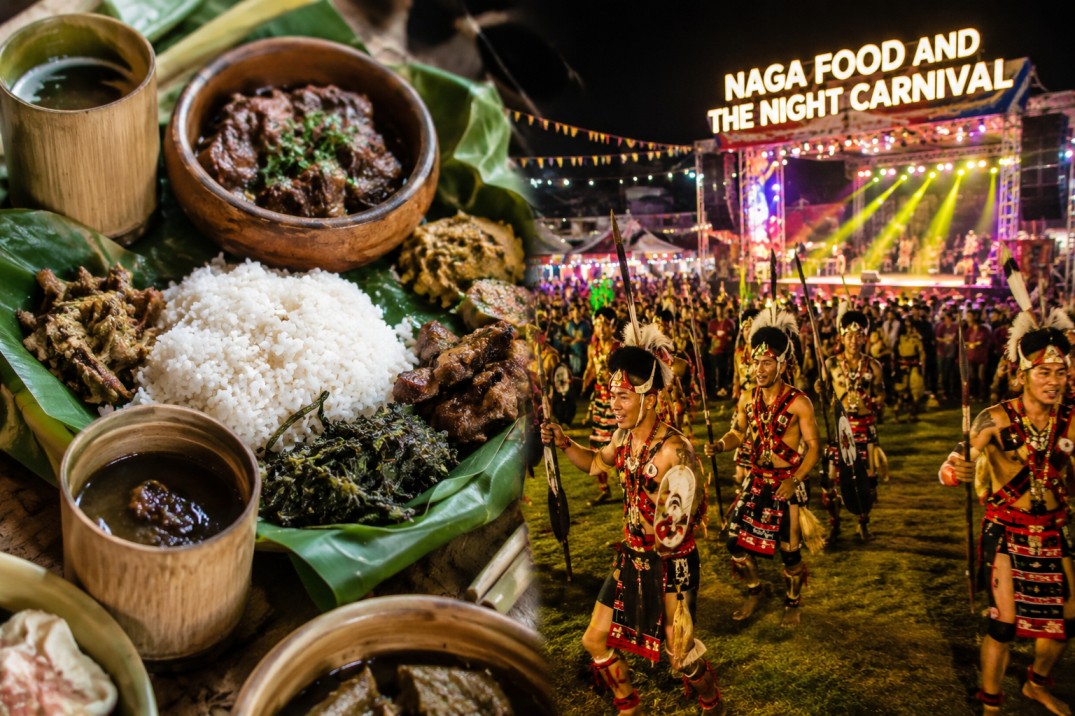 The Hornbill Festival's food culture alone justifies the trip for many travellers. Smoked pork with bamboo shoot is Nagaland's signature dish; axone (fermented soybean) curries appear across multiple stalls; and the Bhut Jolokia (ghost pepper - one of the world's hottest chillies, native to Northeast India) features in chutneys and preparations that demand caution from the uninitiated. Traditional zutho (rice beer) is offered freely at many morungs.
Each evening, the Hornbill Night Carnival brings Kohima's streets alive with food stalls, handicraft sellers, and live music - a natural continuation of the festival energy into the city itself.
Shopping for Authentic Naga Handicrafts
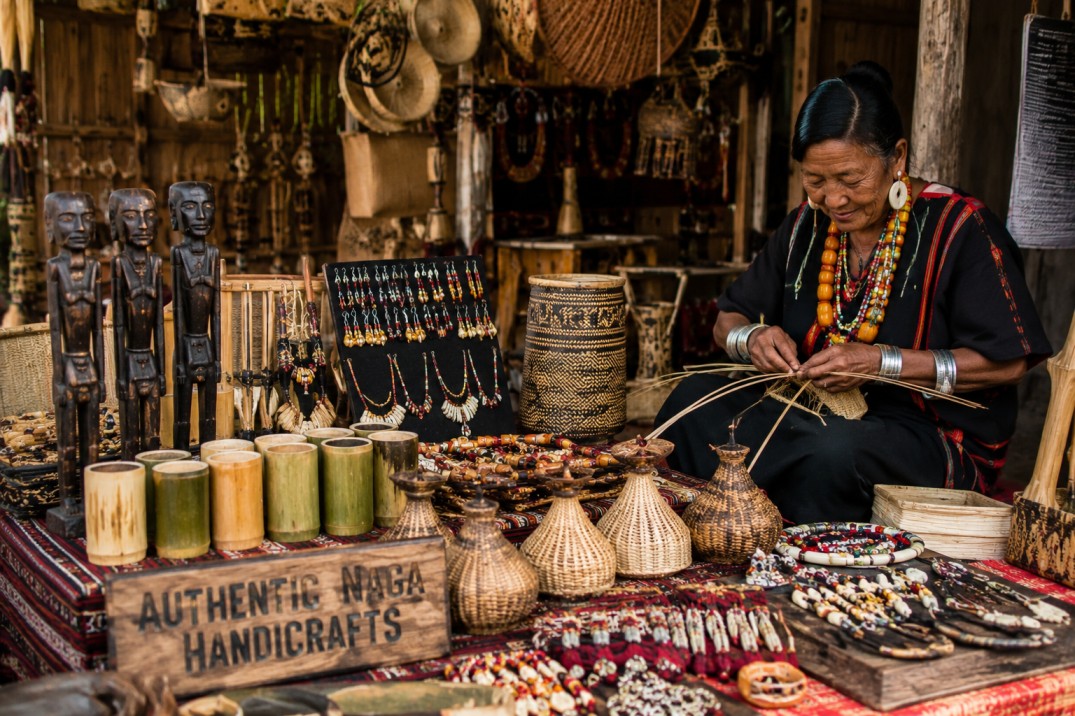 The Artisans' Corner and individual morung stalls offer some of the most fairly priced authentic tribal craft in India:
- Handwoven shawls: ₹800–₹3,500 depending on tribe and weave complexity
- Bamboo and cane products: ₹200–₹800
- Beaded jewellery: ₹300–₹2,000
- Carved wooden figures and ceremonial items: ₹400–₹3,000
Buy directly from tribal artisans inside the festival grounds - not from resellers outside - to ensure the income reaches the communities whose culture you've come to experience.
Beyond the Festival: Exploring Kohima and the Dzuko Valley
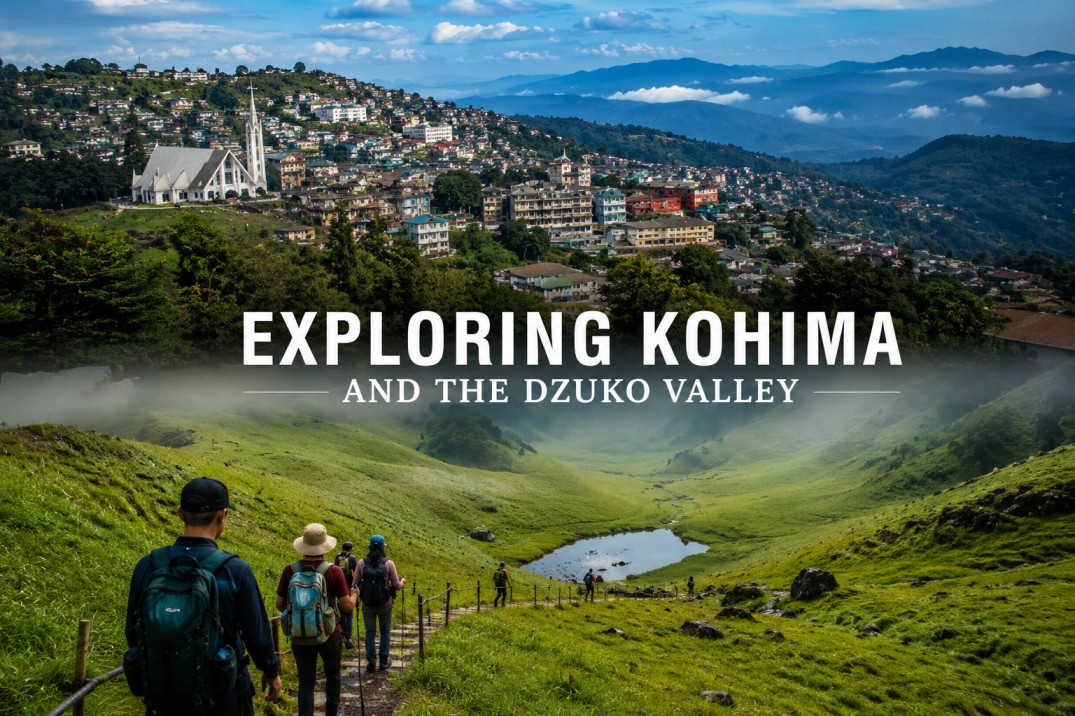 The Hornbill Festival is the centrepiece of any Nagaland trip, but the region around Kohima rewards those who stay a day or two longer.
Kohima War Cemetery - a 10-minute walk from Kohima town centre - is one of the most moving WWII memorials in Asia. It marks the 1944 Battle of Kohima, where Allied forces halted the Japanese advance into India in one of the war's most significant turning points. The inscribed stone at the cemetery carries what many consider the most quietly powerful epitaph in the world. It is worth visiting regardless of your interest in military history.
Nagaland State Museum in Kohima (entry ₹20) holds an excellent collection of tribal artefacts, traditional weapons, ceremonial dress, and oral history documentation - particularly useful context after spending time at the festival morungs.
For those who want to see Nagaland's natural landscape, Dzuko Valley - just 27 km from Kohima - is the most rewarding option in the area. Sitting at 2,452 metres above sea level on the Nagaland-Manipur border, the valley is known for its rolling green meadows, clean mountain streams, and the rare Dzuko Lily that blooms in June and July. In December, the valley is cool and clear with excellent views and far fewer visitors than during the summer flower season. Adding one or two days to visit Dzuko Valley at the end of your festival trip turns a cultural journey into something more complete - a full picture of what Nagaland actually is: tribal, historical, and strikingly beautiful in equal measure.
How to Reach the Hornbill Festival: Step-by-Step
The how to reach Hornbill Festival process, simplified:
- Fly to Dimapur (DMU) - IndiGo, Air India, and SpiceJet operate routes from Kolkata, Guwahati, and Delhi
- Obtain your Inner Line Permit - apply online via the Nagaland ILP portal before travel; free for eligible domestic visitors
- Travel Dimapur → Kohima - shared taxi ₹200–₹300/person; private taxi ₹1,500–₹2,000; approximately 2.5–3.5 hours
- Check in to your Kohima accommodation - stay in Kohima city, not at Kisama; daily transport to the venue is straightforward
- Travel Kohima → Kisama - shared taxis from BOC Stand; ₹100–₹200 one way; services run 8 AM–5 PM during festival week
- Purchase festival entry at the gate - ₹200–₹300/day domestic; ₹500/day international; no advance booking needed
Season and Weather Breakdown
Period | Temp (Day) | Temp (Night) | Conditions | What to Expect |
Dec 1–5 | 15–18°C | 4–8°C | Clear, cool | Peak festival; all tribes present |
Dec 6–10 | 13–17°C | 2–5°C | Mostly clear | Closing days; less crowded |
Kohima (rest of Dec) | 10–14°C | 0–4°C | Cold, dry | Post-festival sightseeing |
Dzuko Valley (Dec) | 10–14°C | -1 to 4°C | Clear, crisp | Great views; no wildflowers |
Oct–Nov (pre-festival) | 18–24°C | 8–14°C | Pleasant | Quiet Kohima; good for sightseeing |
Suggested 7-Day Nagaland Itinerary
Day 1 — Arrive in Kohima Fly into Dimapur, road transfer to Kohima (2.5–3.5 hrs). Check in and settle. Evening walk around Kohima town; dinner at a local restaurant for your first taste of Naga cuisine.
Day 2 — Festival Opening Full day at Kisama Heritage Village. Attend the official inauguration ceremony, walk the morung village, watch morning tribal performances. Evening: Hornbill Night Carnival in Kohima city.
Day 3 — Deep Cultural Immersion Return to Kisama. Spend the morning in the morungs, attend afternoon performances. Focus on 3–4 tribes in detail; attend the bamboo music performance if scheduled.
Day 4 — Indigenous Sports and Artisans Morning: Naga wrestling bouts and traditional archery at the sports ground. Afternoon: Artisans' Corner for handicraft shopping. Evening: Hornbill Music Festival concert.
Day 5 — Kohima City Exploration Morning: Kohima War Cemetery and Nagaland State Museum. Afternoon: Kohima local market for last-minute handicraft purchases. Evening: return to Kisama for the closing programme.
Day 6 — Dzuko Valley Day trip or overnight to Dzuko Valley (27 km from Kohima). Experience the high-altitude meadows, mountain views, and the silence of the Naga hills away from the festival grounds. Return to Kohima by evening or stay overnight at the valley guesthouse.
Day 7 — Departure Transfer to Dimapur for your onward flight. Allow 3–4 hours from Kohima to Dimapur to account for traffic.
Hornbill Festival vs. Other Major Indian Festivals
Festival | Location | Duration | Key Focus | Best For |
Hornbill Festival | Nagaland | 10 days | 17 Naga tribes; cultural mega-event | Cultural immersion, photography |
Pushkar Camel Fair | Rajasthan | 8 days | Livestock trade, folk arts | Desert culture, camel racing |
Ziro Music Festival | Arunachal Pradesh | 4 days | Indie/folk music, open-air setting | Music lovers, nature |
Hemis Festival | Ladakh | 2 days | Buddhist masked dances | Tibetan culture, monasteries |
Sangai Festival | Manipur | 10 days | Manipuri dance, wildlife | Culture, wildlife |
Expert Travel Tips
- Apply for your ILP well before travel. The online Nagaland ILP portal is straightforward and processes applications within 1–2 working days. Don't risk a walk-in at Dimapur during festival week.
- Book accommodation 3 months ahead. Kohima has limited hotel capacity. Mid-range options run ₹2,000–₹5,000/night; homestays ₹800–₹1,500/night. Homestays offer warmer hospitality and better insight into local life.
- Carry adequate cash. Many morung stalls, food vendors, and transport services operate cash-only. Carry at minimum ₹5,000–₹8,000 in cash on festival days.
- Layer up for evenings. Daytime at the festival is comfortable in a light jacket. After 5 PM, Kohima's temperature drops sharply - a fleece and a windproof outer layer are essential, not optional.
- Start at the morungs, not the main stage. Mornings at Kisama are less crowded. Use the first two hours at the morung village before the main stage performances begin - this is where the most authentic, unhurried engagement happens.
- Ask before photographing. The morung elders are not exhibits. A respectful gesture before raising your camera is both culturally appropriate and almost always reciprocated warmly.
- Note that Nagaland is a dry state. Commercial alcohol is prohibited. The rice beer (zutho) offered at morungs and in homes is a cultural tradition, not commercial sale - accept it graciously when offered.
FAQ Section
Q: What is the Hornbill Festival and why is it called the Festival of Festivals? A: The Hornbill Festival is an annual 10-day cultural event held from December 1 to 10 at Kisama Heritage Village, Kohima, Nagaland. It is called the "Festival of Festivals" because it brings together all 17 recognised Naga tribes simultaneously - each with their own distinct traditions, dress, music, and food - in a single shared venue, making it the most comprehensive showcase of Naga culture in existence.
Q: Do I need a permit to visit the Hornbill Festival? A: Yes. Most Indian nationals (except those from Nagaland, Assam, Manipur, Meghalaya, and Arunachal Pradesh) require an Inner Line Permit (ILP) to enter Nagaland. All foreign nationals also need an ILP. Apply online via the official Nagaland ILP portal before travel - the process is free for domestic visitors and straightforward.
Q: What is the best time to visit the Hornbill Festival? A: December 1–5 is the ideal window. The opening ceremony on December 1 has the fullest participation and most ceremonially significant events. Arriving on December 1 and staying through December 4 or 5 gives you the most concentrated cultural experience across performances, sports, and morung visits.
Q: How much does it cost to attend the Hornbill Festival? A: Festival entry is ₹200–₹300/day for domestic visitors and ₹500/day for international tourists. Additional costs include accommodation (₹1,500–₹5,000/night depending on category), food at the festival (₹300–₹700/day), and shared taxis from Kohima to Kisama (₹100–₹200 one way).
Q: What should I not miss at the Hornbill Festival? A: The morung village (allow 3–4 hours minimum), the Zeliang bamboo music performance, Naga wrestling at the sports ground, the Artisans' Corner for authentic handicrafts, the food stalls for smoked pork and traditional rice beer, and the Hornbill Night Carnival in Kohima each evening.
Q: Is Nagaland safe for solo travellers and women? A: Nagaland is widely regarded as one of Northeast India's safest states. Locals are hospitable, the Nagaland Tourism Police maintains a visible presence at the festival grounds, and solo women travellers regularly visit without incident. Standard city-safety awareness applies; avoid isolated areas after dark without company.
Q: Can I combine the Hornbill Festival with other Nagaland destinations? A: Absolutely. Dzuko Valley (27 km from Kohima) is the most natural add-on - a high-altitude valley with rolling meadows and mountain views, accessible as a day trip or overnight from Kohima after the festival. The Kohima War Cemetery, Nagaland State Museum, and the village of Khonoma (famous for Angami terraced farming) are all reachable within a day of Kohima.
Q: How do I travel from Kerala or South India to the Hornbill Festival? A: The most efficient route is to fly from Kochi, Chennai, or Bengaluru to Kolkata or Guwahati, then connect to Dimapur (DMU). From Dimapur, road transfer to Kohima takes 2.5–3.5 hours. As one of the best tour agencies in Kerala, Lumiere Holidays specialises in end-to-end Nagaland packages from South India, including flights, permits, accommodation, and ground transport.
Common Mistakes to Avoid
Skipping the ILP application in advance. This single oversight causes more disrupted festival plans than anything else. The online portal is simple and fast - apply at least a week before travel.
Packing for a tropical trip. Visitors from South India consistently underestimate December temperatures in Kohima. After sunset, the chill is genuine. A real winter jacket and thermal layers are not overcaution - they're necessary.
Spending the whole day at the main performance stage. The stage is impressive, but the morung village is where the depth is. Balance your time between both.
Ignoring the Night Carnival. Many visitors return to their hotel by late afternoon and miss Kohima's evening street life entirely. The Night Carnival is easy, enjoyable, and runs parallel to the festival with no entry fee.
Treating the festival as a one-day visit. The Hornbill Festival rewards multiple days. A single day gives you impressions; two or three days give you understanding. If you've travelled from South India, plan for at least 4–5 festival days.
Buying handicrafts from roadside sellers outside the venue. Quality and pricing are less reliable outside the festival grounds. Buy from the Artisans' Corner or directly from the morung stalls for authentic work at fair prices.
Plan Your Hornbill Festival Trip with Lumiere Holidays
A trip to the Hornbill Festival from South India is entirely achievable with the right planning - and significantly more rewarding when every logistical piece is in place before you land in Dimapur.
At Lumiere Holidays, one of the best tour operators in South India and a trusted tour agency in Kerala, our travel consultants have direct experience designing Northeast India itineraries. We handle the ILP documentation, curate the right accommodation in Kohima, time your arrival for the festival's best days, and build in day trips to Dzuko Valley, the War Cemetery, and surrounding villages - so your trip has depth beyond the festival grounds.
Our travel experts at Lumiere Holidays can build a custom Hornbill Festival itinerary around your dates and budget - whether you're travelling solo, as a couple, with family, or as a photography group.
👉 Contact our Kerala travel desk for a personalised quote
The Festival of Festivals deserves a plan that does it justice - let us help you build one.
Plan your trip with Lumiere Holidays
Ready to travel? Explore our most-booked packages: