
Nepal Flood News 2026: Is Nepal Open for Tourism? Full Traveler Guide
Get the latest Nepal flood news and a complete safety breakdown - which regions are affected, which destinations remain open, and expert tips for planning your Nepal trip in 2026.
Introduction
If you've been following Nepal flood news over the past few weeks, you've likely seen conflicting headlines - some declaring the country in crisis, others insisting it's open for business. Both are true, just for different parts of the country. Late August 2026 brought devastating flash floods to Nepal's Bhote Koshi and Trishuli river corridor, and the images have understandably left travellers with a trip booked - or one they're dreaming about - wondering what to do next. This guide breaks down exactly what happened, which regions are affected, which destinations remain fully open, and how to plan a Nepal trip responsibly right now.
Quick Answer Summary
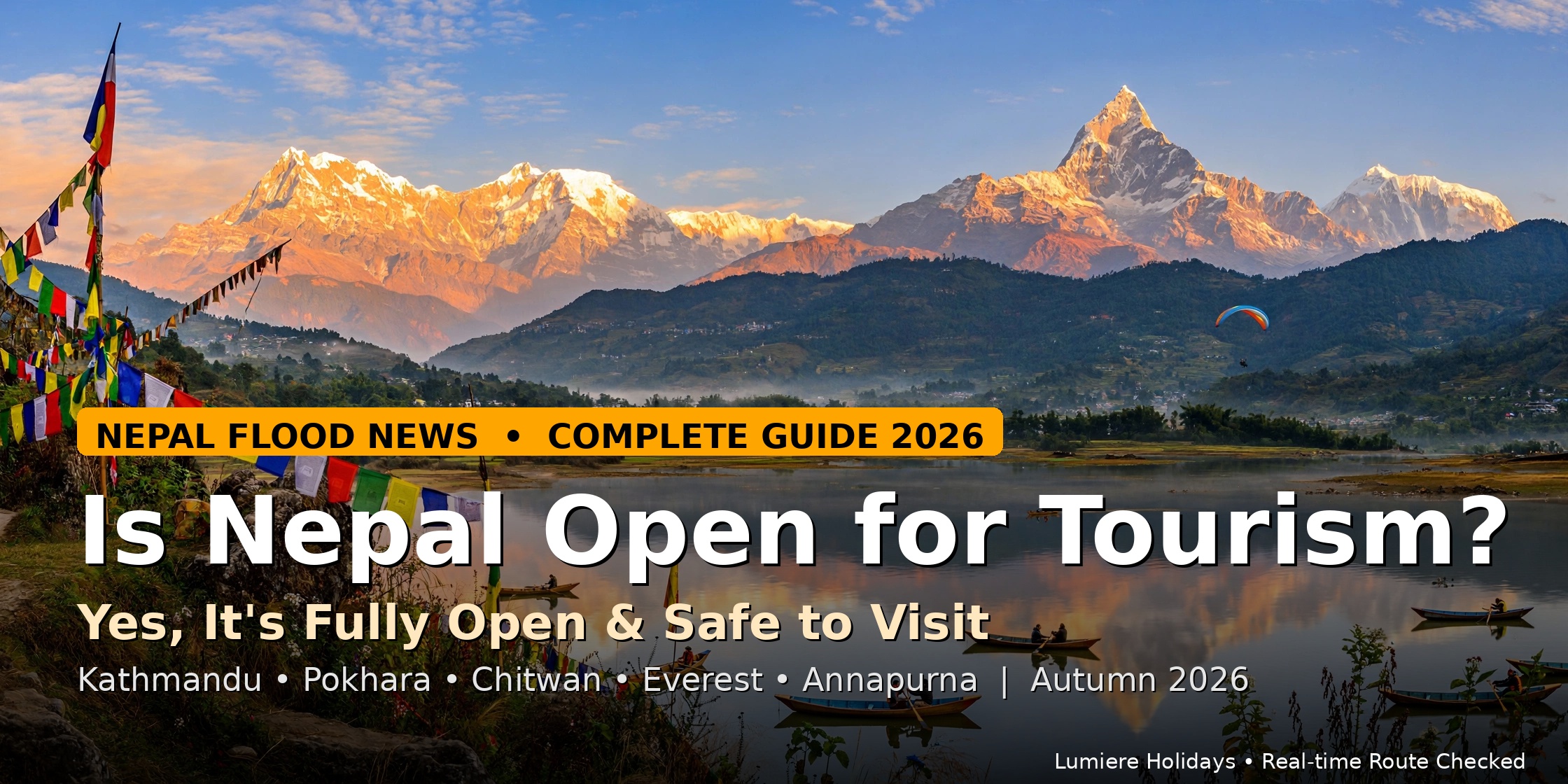
Yes, Nepal is open for tourism. The floods that struck the Bhote Koshi–Trishuli corridor on 26 August 2026 severely damaged parts of Rasuwa, Nuwakot, and Dhading districts, but major tourist hubs - Kathmandu, Pokhara, Chitwan, Lumbini, and most trekking regions including Everest and Annapurna - remain fully accessible and operational.
Key Takeaways
- The flash flood hit a specific river corridor in north-central Nepal, not the entire country
- Kathmandu, Pokhara, Chitwan, and Lumbini are unaffected and running normal tourism services
- Some roads, bridges, and trails in Rasuwa and Nuwakot districts remain damaged or closed
- Nepal's Tourism Board launched the #NepalCalling campaign encouraging travellers not to cancel trips
- New international air access is expanding, including Fly Dubai's planned Pokhara–Dubai direct route
- Always verify route-specific conditions before finalising an itinerary, as recovery work is ongoing
What Happened: Nepal Flood News Explained
Nepal flood news dominated headlines starting late August 2026, when flash floods and mudslides struck the Bhote Koshi and Trishuli river areas near the Nepal-China border. A flash flood is a sudden, fast-rising flood caused by intense rainfall or glacial outburst events, typically in mountainous or narrow river valleys - which is exactly what made this event so destructive to roads and bridges built along steep river corridors.
The disaster caused significant loss of life and infrastructure damage, with search and recovery operations continuing for weeks afterward. Nepal's government and tourism authorities have been transparent that casualty figures were still being updated as recovery efforts progressed, so travellers should rely on official government bulletins rather than early social media reports for the latest numbers.
Which Regions Were Affected?
Rasuwa District: Rasuwa was heavily affected, with damage reported to roads and bridges. As a result, access to some trekking areas may be limited, and travellers should check local conditions before planning a visit.
Nuwakot District: Nuwakot was affected by infrastructure damage, with recovery and restoration work continuing in some areas. Travellers should confirm road conditions and accessibility before travelling.
Dhading District: Dhading was partially affected, with some road closures reported. Travel conditions can vary by location, so checking the latest local updates is advisable.
Kathmandu Valley: Kathmandu Valley remained unaffected, with tourist attractions, accommodation, transportation, and other visitor services operating normally.
Pokhara: Pokhara remained unaffected, and tourism activities and services continued to operate normally.
Chitwan National Park: Chitwan National Park remained open, with tourism activities operating normally. Visitors can continue to plan wildlife and nature experiences in the region.
Lumbini: Lumbini remained unaffected, with tourist sites and services operating normally for visitors.
Everest Region: The Everest region remained unaffected, and trekking activities were operating normally. Trekkers should still follow local safety guidance and check current trail conditions.
Annapurna Region: The Annapurna region remained unaffected, with trekking routes operating normally. As with any mountain destination, travellers should check current weather and trail conditions before setting out.
Is It Safe to Visit Nepal Now?
Is it safe to visit Nepal now is the single most-asked question following the floods, and the honest answer is: it depends entirely on where you're going. Nepal is not one homogeneous travel zone - it's roughly the size of England, with dramatically different terrain and conditions region to region. Nepal's Tourism Board has been explicit that "open" doesn't mean every road or trail is passable; it means the country's core tourism infrastructure - hotels, airports, guides, and most attractions - is operating normally.
Based on current tourism data and recent traveller trends, cancellations spiked sharply in the days immediately following the flood, particularly for the September–November peak season, prompting the government's public reassurance campaign. Travel agencies with on-ground contacts, like Lumiere Holidays, are best positioned to confirm real-time conditions for your specific route before you book.
Best Time to Visit Nepal (Season by Season)
Autumn (September–November): Autumn is one of the best seasons for travelling, with clear skies and relatively stable weather conditions. It is particularly suitable for trekking, enjoying mountain views, and outdoor activities. This period is generally considered the peak travel season.
Winter (December–February): Winter brings cold temperatures at higher altitudes, while lower-altitude areas generally experience clearer and more comfortable conditions. It is a good time for cultural tours and treks at lower elevations.
Spring (March–May): Spring offers mild weather and colourful rhododendron blooms in many mountain regions. The pleasant conditions make it suitable for trekking, nature exploration, and wildlife viewing.
Monsoon (June–August): The monsoon season brings heavy rainfall, which can lead to slippery trails and an increased risk of landslides. Because of these conditions, trekking is generally not recommended during this period.
Autumn remains the best time to visit Nepal for most travellers, offering the clearest mountain visibility and the most stable trail conditions - which is also why the flood's timing, just before peak season, hit the tourism sector so hard.
Places to Visit in Nepal That Remain Fully Open
- Kathmandu Valley - UNESCO World Heritage sites including Durbar Square, Swayambhunath, and Boudhanath Stupa
- Pokhara - Phewa Lake, paragliding, and gateway to the Annapurna region
- Chitwan National Park - Jungle safaris, rhino and tiger spotting
- Everest Base Camp Trek - Operating on its standard route via Lukla
- Annapurna Circuit and Base Camp - Fully accessible trekking routes
- Lumbini - Birthplace of Buddha, a major pilgrimage and heritage site
- Bhaktapur and Patan - Ancient royal cities near Kathmandu
Itinerary Recommendation: 8-Day Nepal Highlights Trip
- Day 1–2: Arrive Kathmandu - Durbar Square, Swayambhunath, Boudhanath
- Day 3: Fly to Pokhara - Phewa Lake, sunset at Sarangkot
- Day 4: Pokhara - optional paragliding or short Annapurna foothills hike
- Day 5–6: Chitwan National Park - jungle safari, canoe ride, Tharu village visit
- Day 7: Return to Kathmandu - Bhaktapur day trip
- Day 8: Departure
This itinerary avoids all flood-affected corridors entirely while covering Nepal's most iconic experiences.
Expert Travel Tips for Visiting Nepal Right Now
- Book through an established travel agency that can confirm real-time road and trail conditions before departure
- Avoid independent travel through Rasuwa, Nuwakot, and the Bhote Koshi–Trishuli corridor until authorities confirm full restoration
- Purchase travel insurance that explicitly covers natural disaster disruption and trip interruption
- Check Nepal Tourism Board updates and your home country's travel advisory in the week before departure, since conditions are evolving
- Carry a printed and digital copy of your itinerary in case of connectivity issues in remote areas
- Support local guides and lodges - tourism revenue is directly aiding recovery in affected communities
FAQ Section
Q: Is Nepal open for tourism after the flood?
A: Yes. Nepal's major tourism destinations - Kathmandu, Pokhara, Chitwan, Lumbini, and popular trekking routes - remain fully operational. Only specific districts along the Bhote Koshi–Trishuli corridor have restricted access due to infrastructure damage.
Q: What caused the Nepal flood in 2026?
A: A flash flood struck the Bhote Koshi and Trishuli river corridor near the Nepal-China border on 26 August 2026, triggered by intense rainfall in the mountainous north-central region, causing severe damage to roads, bridges, and settlements.
Q: Is it safe to trek Everest Base Camp after the floods?
A: Yes. The Everest Base Camp route via Lukla is in a different region from the flood-affected corridor and has continued operating normally throughout the recovery period.
Q: Should I cancel my Nepal trip?
A: Not necessarily. If your itinerary doesn't route through Rasuwa, Nuwakot, or Dhading, there's no operational reason to cancel. Confirm your specific route with your travel agency rather than cancelling based on general headlines.
Q: What is the best time to visit Nepal in 2026?
A: Autumn (September to November) remains the best time to visit Nepal, offering clear skies and stable trekking conditions, though travellers should confirm current route status given the recent flooding.
Q: Are flights to Nepal still operating normally?
A: Yes. International access is unaffected and expanding - for example, Fly Dubai's new direct Pokhara–Dubai route strengthens international connectivity to Nepal.
Q: How can I check current conditions before booking?
A: Rely on official Nepal Tourism Board updates, your home country's government travel advisory, and a travel agency with on-ground contacts rather than social media reports, since figures and conditions change frequently during recovery.
Common Mistakes to Avoid
- Assuming the entire country is affected based on flood headlines about one region
- Booking independently without confirming current road/trail status for your specific route
- Skipping travel insurance with natural disaster coverage
- Relying on outdated casualty or damage figures instead of the latest official updates
- Cancelling a trip to unaffected regions like Pokhara or Chitwan unnecessarily, which also withdraws tourism income from communities that need it
Plan Your Nepal Trip with Confidence
Nepal flood news has understandably made travellers cautious, but with the right planning, a trip to Nepal remains both safe and deeply worthwhile - and your visit directly supports communities working through recovery. Our travel experts at Lumiere Holidays can build a custom Nepal itinerary around your dates and budget, with real-time route confirmation before you fly. As the best international travel agency in Kerala for Himalayan and South Asian destinations, we handle every detail - from Kathmandu heritage tours to Everest Base Camp treks - so you can travel with peace of mind. Get in touch with our Nepal specialists today to start planning your trip.
Plan your trip with Lumiere Holidays
Ready to travel? Explore our most-booked packages: